How to Build Backlinks: A Step-by-Step Guide for 2026

Building backlinks often sounds like a numbers game, piling up as many links as possible to climb Google’s ranks. But here’s the shocker: just ten high-quality backlinks can do more for your website than hundreds of low-value ones. Most people chase quantity and leave massive gains on the table. It is the strategy behind each link that decides if your website rises or sinks—and that flips the whole script on what actually drives real SEO results.
Table of Contents
- Step 1: Assessing Your Current Backlink Profile
- Step 2: Identify Target Websites For Backlinks
- Step 3: Create High-Quality Content For Outreach
- Step 4: Reach Out To Target Websites For Link Building
- Step 5: Track And Analyze Your Backlink Progress
Quick Summary
| Key Point | Explanation |
|---|---|
| 1. Perform a Backlink Audit | Use tools like Google Search Console and Ahrefs to analyze current backlinks for informed strategy development. |
| 2. Focus on Domain Authority | Target high-authority websites for backlinks to ensure better visibility over numerous low-quality links. |
| 3. Create High-Quality Content | Develop informative content that solves industry problems, increasing the likelihood of references from other sites. |
| 4. Personalize Outreach Efforts | Tailor your communication to demonstrate value to the recipient, enhancing engagement and increasing link acquisition success. |
| 5. Monitor Backlink Performance | Regularly track backlinks and analyze their impact on rankings, allowing for adjustments in future link building strategies. |
Step 1: Assessing Your Current Backlink Profile
Building a successful backlink strategy begins with understanding your current digital landscape. Knowing exactly where your website stands in terms of existing backlinks provides the critical foundation for strategic link building. Before diving into acquisition tactics, you need a comprehensive snapshot of your current backlink ecosystem.
Performing a Comprehensive Backlink Audit
Starting your backlink assessment requires selecting the right diagnostic tools. Google Search Console and professional SEO platforms like Ahrefs offer comprehensive backlink analysis capabilities. These tools reveal crucial information about your existing link profile, including total number of backlinks, referring domains, anchor text distribution, and link quality.
Below is a summary table of essential SEO tools for backlink audits, including their primary purpose and typical use in assessing your current backlink profile.
| Tool Name | Primary Function | Typical Use |
|---|---|---|
| Google Search Console | Analyzes links and traffic | Initial backlink overview and identification of referring domains |
| Ahrefs | Comprehensive backlink and site analysis | In-depth link quality, anchor text, and domain authority review |
| Moz Domain Authority | Measures site/domain credibility | Evaluation of the authority of linking websites |
| SEMrush | Backlink analytics and competitor comparison | Tracking link profile changes and competitor benchmarking |
When conducting your audit, pay special attention to several key metrics. Domain authority of linking websites matters significantly more than raw link quantity. A single backlink from a highly respected industry website carries substantially more weight than dozens of links from low-quality sites. Look for patterns in your current backlinks – which content types attract the most external references? What sectors or industries are most likely to link to your website?
Discover advanced link building strategies that complement your initial audit. Identifying link gaps and understanding your current profile allows you to develop a more strategic approach to future backlink acquisition.
Careful analysis reveals not just opportunities but potential risks. Toxic or spammy backlinks can harm your search engine rankings. During your audit, flag and document any suspicious links originating from questionable websites. Most professional SEO tools provide clear indicators of potentially harmful backlinks, allowing you to disavow them through Google’s webmaster tools.
The goal of this initial assessment is transformative: convert your current backlink data into an actionable roadmap. By understanding your existing link profile’s strengths and weaknesses, you create a precise strategy for future link building efforts. Treat this step as your strategic launchpoint, transforming raw data into a powerful approach for improving your website’s search engine visibility.
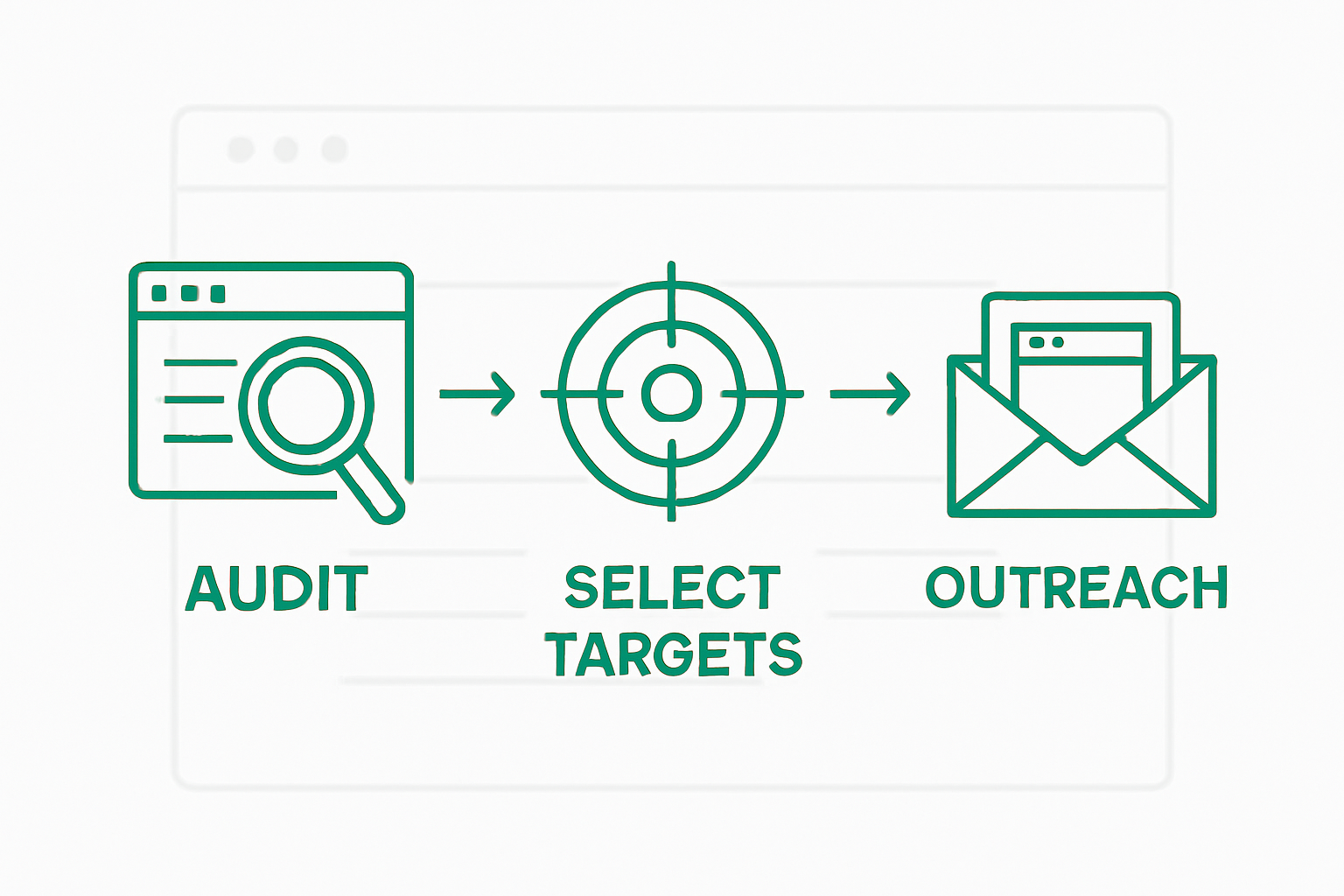
This table gives an overview of the five main steps in building backlinks, showing the key activity, difficulty, and expected outcome for each phase.
| Step | Key Activity | Estimated Difficulty | Expected Outcome |
|---|---|---|---|
| Assess Current Backlink Profile | Audit existing backlinks | Medium | Understand strengths & weaknesses |
| Identify Target Websites for Backlinks | Research and shortlist sites | Medium | List of high-value, relevant prospects |
| Create High-Quality Content | Develop valuable resources | High | Outreach-ready, link-worthy materials |
| Reach Out for Link Building | Personalized communication | High | Secured backlinks from target sites |
| Track & Analyze Backlink Progress | Monitor new/existing backlinks | Medium | Continual improvement to strategy |
Step 2: Identify Target Websites for Backlinks
After assessing your current backlink profile, the next critical phase involves strategically identifying websites that will provide high-quality, relevant backlinks to your digital presence. This step transforms your link building from a random approach to a precision-driven strategy that amplifies your website’s authority and search engine visibility.
Domain Authority Matters significantly when selecting potential backlink sources. Not all websites offer equal value. You want to target domains with established credibility in your specific industry or related niches. Professional SEO tools like Moz Domain Authority help you quickly evaluate a website’s potential link value by assigning numerical scores that indicate overall site strength and reputation.
Identifying target websites requires a multifaceted approach. Start by examining competitors who consistently perform well in search rankings. Analyze their backlink profiles to uncover potential linking opportunities. Look for websites that have already demonstrated willingness to link to content similar to yours. Industry-specific publications, authoritative blog networks, and professional association websites often represent prime backlink targets.
Explore advanced link building techniques that complement your targeting strategy. Search engines prioritize contextually relevant links, so focus on websites that share thematic connections with your content. A technology blog linking to a software company makes more sense than a random lifestyle website referencing technical content.
Develop a systematic approach to tracking potential backlink sources. Create a spreadsheet documenting each target website’s domain authority, relevance to your industry, contact information, and potential linking opportunities. This organizational method transforms your link building from a haphazard process into a structured, measurable initiative.
Remember that quality trumps quantity every time. Ten strategic, high-authority backlinks will consistently outperform hundreds of low-quality links. Your goal is building a network of credible, contextually relevant connections that signal to search engines the genuine value and expertise of your website.
Step 3: Create High-Quality Content for Outreach
Content creation stands as the cornerstone of successful backlink acquisition. Your goal is to craft materials so compelling and valuable that other websites will naturally want to reference and share them. High-quality content becomes your most powerful link building asset, transforming outreach from a transactional process into an opportunity for genuine value exchange.
Strategic content development requires understanding your target audience and the websites you want to attract. This means producing materials that go beyond surface-level information, delivering deep insights, original research, or unique perspectives that fill existing knowledge gaps. Learn advanced content strategies that elevate your link building approach from ordinary to exceptional.
Consider creating content formats with inherent link-attracting potential. Comprehensive industry reports, data-driven research studies, detailed how-to tutorials, and infographics presenting complex information visually are particularly effective. Authoritative, well-researched content signals expertise and increases the likelihood that respected websites will reference your work.
Your content must solve real problems or answer specific questions within your industry. Think about the challenges your target audience faces and develop resources that provide clear, actionable solutions. This approach transforms your content from mere information to a valuable resource that websites will be eager to link to.
When developing your content, focus on three core principles: originality, depth, and presentation. Original insights cannot be found elsewhere. Depth means thoroughly exploring topics beyond surface-level explanations. Presentation involves making complex information accessible through clear writing, strategic formatting, and visual elements that enhance understanding.
Verify your content’s link-worthiness by asking critical questions: Would this resource genuinely help someone in my industry? Does it provide unique perspectives or data? Would I want to link to this if I encountered it on another website? If the answer is consistently yes, you have created a strong foundation for successful backlink outreach.

Step 4: Reach Out to Target Websites for Link Building
Reaching out to potential backlink partners transforms your carefully crafted content into actual link opportunities. Effective outreach requires a strategic, personalized approach that goes far beyond generic email templates. Your communication must demonstrate genuine value and understanding of the target website’s specific needs and audience.
Professional communication is key in successful link building outreach. Begin by identifying the appropriate contact person at each target website. Look for editors, content managers, or website owners who have demonstrated interest in similar content. Explore strategic networking techniques that can enhance your outreach effectiveness and build lasting professional relationships.
Craft personalized email pitches that clearly articulate why your content provides unique value to their audience. Avoid generic requests and instead focus on how your resource solves a specific problem or fills an information gap. Reference specific articles or sections of their website to show you’ve done genuine research. Highlight the mutual benefit – explain exactly how linking to your content will enhance their existing resources or provide additional value to their readers.
Develop a systematic approach to tracking your outreach efforts. Create a spreadsheet documenting each target website’s contact information, initial outreach date, follow-up attempts, and response status. This organizational method allows you to manage multiple outreach campaigns efficiently and follow up strategically.
Expect and prepare for rejection. Not every outreach attempt will result in a backlink, and that’s perfectly normal. Maintain a professional, persistent approach without becoming pushy. If a website doesn’t respond initially, consider a polite follow-up email after two weeks. Some content managers may require multiple touchpoints before engaging.
Verify the success of your outreach by monitoring actual link placements, tracking response rates, and measuring the quality of acquired backlinks. A successful outreach campaign isn’t just about quantity but about securing high-quality, relevant links that genuinely improve your website’s authority and search engine visibility.
Step 5: Track and Analyze Your Backlink Progress
Tracking and analyzing your backlink progress transforms raw data into actionable insights that drive continuous improvement in your link building strategy. Consistent monitoring allows you to understand the real impact of your outreach efforts and make informed decisions about future link acquisition tactics.
Professional SEO tools like Ahrefs, SEMrush, and Moz provide comprehensive backlink tracking capabilities. Discover advanced performance analysis techniques that help you decode the complex metrics behind successful link building. Focus on key performance indicators that truly matter: domain authority of linking sites, referral traffic, anchor text diversity, and the contextual relevance of acquired backlinks.
Establish a regular monitoring schedule to track your backlink portfolio’s evolution. Weekly or bi-weekly reviews help you quickly identify trends, potential issues, and opportunities. Pay special attention to newly acquired links, examining their quality, placement, and potential impact on your overall search engine rankings. Not all backlinks carry equal weight – a single high-quality link from a respected industry website can often outperform multiple low-quality links.
Conduct periodic competitive backlink analysis to understand how your link building efforts compare to industry competitors. This approach provides critical insights into potential linking opportunities you might have overlooked. Examine the backlink profiles of top-performing websites in your niche to identify patterns and strategies that could inform your own link acquisition approach.
Develop a systematic approach to documenting your findings. Create a comprehensive tracking spreadsheet that records each backlink’s details: source website, domain authority, anchor text, date of acquisition, and observed impact on search rankings. This documentation transforms your link building from a reactive process to a strategic, data-driven initiative.
Remember that backlink tracking is an ongoing process of refinement. Successful link building requires continuous learning and adaptation. Use the insights gained from your analysis to adjust your content creation, outreach strategies, and targeting approach. The most effective link building campaigns are those that remain flexible and responsive to changing digital landscapes.
Transform Your Backlink Strategy With Finepoint Design
You have seen how a strategic approach to assessing backlinks and building quality relationships can completely change your website’s visibility. But handling complex audits, content creation, and continuous monitoring can quickly become overwhelming. If you want faster progress and measurable ROI, you need expertise that goes beyond do-it-yourself tactics—and that is where we come in.

Let the professionals at Finepoint Design help you eliminate backlink guesswork and focus on results. Our team partners with you to audit your backlink profile, build powerful new connections, and create content that earns real links. Most importantly, you benefit from proven systems that drive higher rankings and bring in valuable traffic. Take action now. Get started and see your website deliver the results your business deserves.
Frequently Asked Questions
What is a backlink and why is it important for SEO?
A backlink is a hyperlink from one website to another, and it plays a crucial role in SEO by signaling to search engines that your content is valuable and credible. High-quality backlinks can improve your website’s authority and search engine rankings.
How do I assess my current backlink profile?
You can assess your current backlink profile by using tools such as Google Search Console or SEO platforms like Ahrefs. These tools provide insights into the number of backlinks, referring domains, link quality, and anchor text distribution.
What are some effective strategies for building high-quality backlinks?
Effective strategies for building high-quality backlinks include creating compelling content, targeting websites with high domain authority, and personalizing outreach efforts to show genuine value to potential link partners.
How can I track the progress of my backlink building efforts?
You can track the progress of your backlink building efforts using professional SEO tools that offer backlink tracking capabilities, such as Ahrefs or SEMrush. Monitor key performance indicators like the quality of linking sites, referral traffic, and the overall impact on your search rankings.