Master Online Networking for Business: Build Connections Effectively

Online networking often gets hyped as the shortcut to rapid business growth, but most people miss the mark entirely. Chasing every connection usually leads nowhere and feels like shouting into the void. Here is a surprise: targeted networking can help you generate 3-5 qualified leads a month and shape your future partnerships and opportunities with much less effort than you think. The real win starts when you ditch random outreach and build a focused strategy that actually matches your business goals.
Table of Contents
- Step 1: Define Your Networking Goals
- Step 2: Choose The Right Online Platforms
- Step 3: Create An Engaging Profile
- Step 4: Connect And Engage With Others
- Step 5: Follow Up And Build Relationships
- Step 6: Measure Your Networking Success
Quick Summary
| Key Point | Explanation |
|---|---|
| 1. Define clear networking goals | Establish specific, measurable objectives that support your business growth to focus your networking efforts effectively. |
| 2. Choose suitable online platforms | Select platforms where your target audience engages, prioritizing quality connections over quantity for meaningful interactions. |
| 3. Create an engaging professional profile | Develop a compelling profile that highlights your unique value, providing a positive first impression to potential connections. |
| 4. Engage meaningfully with others | Focus on authentic interactions by personalizing connection requests and contributing valuable insights to discussions. |
| 5. Follow up to build relationships | Implement strategic and timely follow-ups to transform initial contacts into enduring professional relationships. |
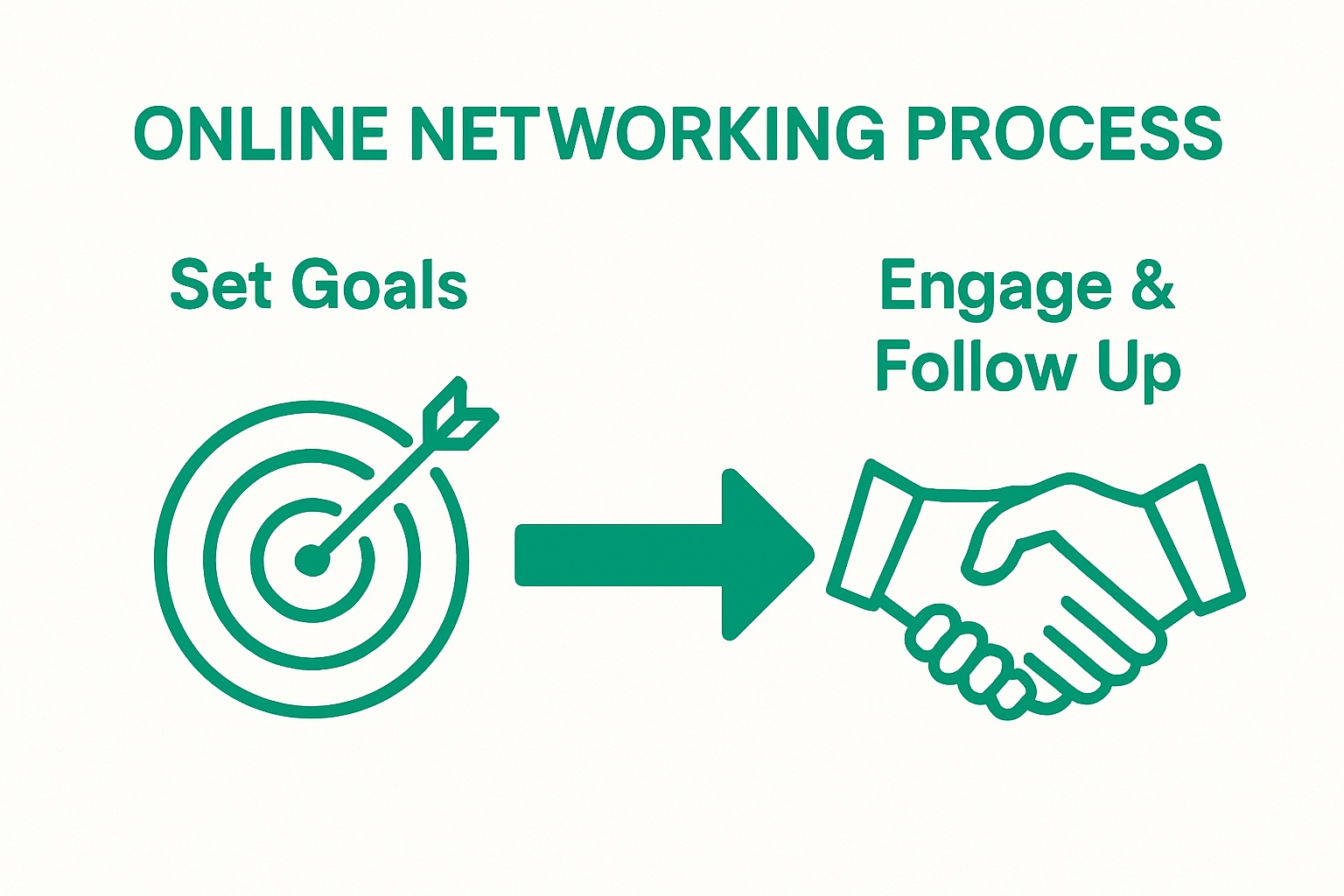
Step 1: Define Your Networking Goals
Successful online networking for business begins with crystal clear objectives. Without specific goals, your networking efforts become scattered and ineffective. Smart entrepreneurs understand that targeted networking produces significantly better results than random connection attempts.
Starting your online networking journey requires deep self reflection about what you genuinely want to achieve. Are you seeking potential clients, industry partnerships, mentorship opportunities, or knowledge expansion? Each goal demands a different strategic approach. Your networking strategy must align precisely with your business growth objectives.
UC Berkeley School of Information recommends entrepreneurs categorize their networking goals into specific, measurable categories. For service based business owners, this might mean targeting connection goals like:
- Generating 3-5 qualified leads monthly
- Building relationships with 2-3 potential strategic partners
- Expanding professional network within your specific industry niche
When defining goals, consider both short term and long term outcomes. Short term goals might involve immediate lead generation, while long term objectives could focus on establishing thought leadership and sustainable professional relationships. The key is creating a balanced approach that provides immediate value while simultaneously building a robust professional network.
To verify you’ve successfully defined your networking goals, ask yourself these critical questions: Can I articulate my networking objectives in one clear sentence? Do these goals directly support my business growth strategy? Are my goals specific, measurable, and time bound? If you can confidently answer yes to these questions, you’ve completed this crucial first step in mastering online networking for business.
Below is a checklist to help you verify if you’ve successfully defined your online networking goals and ensure they’re aligned with your business growth strategy.
| Verification Question | Yes/No |
|---|---|
| Can I articulate my networking objectives in one clear sentence? | |
| Do these goals directly support my business growth strategy? | |
| Are my goals specific, measurable, and time bound? | |
| Have I addressed both short- and long-term networking outcomes? | |
| Do I know the key areas (clients, partnerships, knowledge, etc.) I want to target? |
Step 2: Choose the Right Online Platforms
Selecting the ideal online networking platforms requires strategic thinking beyond simply creating accounts everywhere. Your chosen platforms must align precisely with your business objectives and target audience. Not all platforms deliver equal networking potential, so careful selection becomes crucial for effective online business connections.
Boston University recommends understanding each platform’s unique professional ecosystem. LinkedIn remains the gold standard for business networking, offering robust professional connection opportunities. However, platforms like Twitter, Instagram, and industry specific forums can provide specialized networking channels depending on your business sector.
Professional service providers should prioritize platforms where their ideal clients and industry peers congregate. A graphic designer might find more value on visual platforms like Behance or Instagram, while a business consultant might leverage LinkedIn more extensively. Depth matters more than breadth when building meaningful professional connections.
Consider evaluating potential platforms through these strategic lenses:
- Audience demographics matching your target market
- Platform’s professional reputation and user engagement levels
- Tools and features supporting meaningful business interactions
- Ease of creating and sharing professional content
To verify platform selection success, assess whether the platforms you’ve chosen allow you to consistently engage with potential clients, share professional insights, and expand your network authentically. Check if these platforms provide analytics to track your networking progress. Learn more about maximizing your social media management strategy to optimize your online networking efforts.
Remember that quality connections trump random connections. Focus on platforms where you can genuinely showcase your professional expertise and build meaningful relationships that support your business growth objectives.
This table summarizes different online networking platforms and highlights which type of professional finds them most useful, along with key strategic considerations for each platform.
| Platform | Best For | Strategic Considerations |
|---|---|---|
| Business consultants, service providers | Strong for professional connections, thought leadership, and B2B interactions | |
| Graphic designers, visual professionals | Visual branding, portfolio sharing, high engagement with creative audiences | |
| Industry experts, entrepreneurs | Quick updates, real-time discussions, finding trending topics | |
| Behance | Designers, illustrators | Creative portfolio showcase, discovery by industry peers |
| Industry Forums | Niche professionals | Niche-specific discussions, highly targeted networking |
Step 3: Create an Engaging Profile
Your online networking profile serves as your digital professional introduction. It acts as a powerful first impression that can either attract or repel potential business connections. A compelling profile goes beyond basic information and tells a strategic story about your professional capabilities.
Harvard Business School Online recommends crafting a profile that highlights your unique professional value proposition. This means developing a narrative that showcases not just your skills, but the specific problems you solve for clients or businesses.
Start by selecting a professional headshot that represents your brand authentically. Choose a high quality photo where you appear approachable and confident. Your profile picture should be current, well lit, and reflect your professional environment. Avoid casual selfies or overly staged corporate shots.
Your professional summary requires careful crafting. Think of it as a compelling elevator pitch that quickly communicates your expertise, industry specialization, and the unique value you bring. Use clear, concise language that speaks directly to your target audience. Incorporate relevant keywords naturally to improve discoverability.
Critical profile elements include:
- A headline that succinctly describes your professional role
- Detailed work experience highlighting key achievements
- Specific skills that demonstrate your professional capabilities
- Recommendations or endorsements from respected professionals
To verify your profile’s effectiveness, ask yourself: Would a potential client or partner be impressed and motivated to connect after reading my profile? Does my profile clearly communicate my professional strengths? Learn more about creating a standout professional narrative to maximize your online networking potential.
Remember that your profile is a living document. Regularly update it to reflect your current professional accomplishments and evolving business goals. Authenticity combined with strategic presentation will transform your online profile from a simple information page to a powerful networking tool.
Step 4: Connect and Engage with Others
Successful online networking transcends mere connection requests. Meaningful engagement requires strategic interaction that demonstrates genuine professional interest and value. Think of online networking like attending a professional conference where every interaction is an opportunity to build lasting relationships.
Rutgers University emphasizes the importance of purposeful online interaction. Start by sending personalized connection requests that explain why you want to connect. Generic requests often get ignored. Instead, reference something specific from their profile or recent professional activity that genuinely interests you.
Comment thoughtfully on posts from your professional network. Avoid generic responses like “Great post!” Instead, provide substantive insights that showcase your expertise. Share experiences, ask intelligent questions, or offer additional perspective that adds real value to the conversation. This approach positions you as a knowledgeable professional rather than a passive observer.
Engagement strategies should include:
- Sharing relevant industry content
- Offering constructive comments on others’ posts
- Participating in professional group discussions
- Supporting connections by congratulating achievements
Consistent engagement matters more than sporadic interactions. Set aside dedicated time weekly to interact meaningfully within your professional networks.
Treat online platforms as dynamic conversation spaces where relationship building happens gradually through authentic communication.
Explore advanced social media management strategies to refine your networking approach. To verify your engagement effectiveness, track metrics like connection response rates, meaningful conversation initiations, and professional opportunities generated through your online interactions.
Remember that online networking is a long term investment. Build relationships with patience, professionalism, and genuine interest in others’ professional journeys. Quality connections will emerge naturally when you approach networking as a collaborative opportunity rather than a transactional exchange.
Step 5: Follow Up and Build Relationships
Successful online networking transforms initial connections into meaningful professional relationships through strategic and consistent follow up. Building relationships requires more than a single interaction – it demands intentional, thoughtful communication that demonstrates genuine professional interest.
Harvard Business School Online emphasizes the critical nature of timely and personalized follow up. Within 48 hours of an initial connection or conversation, send a personalized message that references your previous interaction. This demonstrates attentiveness and sets the foundation for a potential professional relationship.
Develop a systematic approach to relationship maintenance. Create a simple tracking system to monitor your professional connections. This could be a spreadsheet or a dedicated contact management tool that helps you remember key details about each connection. Track interaction dates, shared interests, and potential collaboration opportunities.
Effective follow up strategies include:
- Sharing relevant industry articles or resources
- Offering sincere congratulations on professional achievements
- Proposing specific collaboration opportunities
- Providing value without immediate expectation of return
Schedule periodic check ins with your professional network. These need not be lengthy interactions. A brief message checking in, sharing an interesting insight, or offering support can maintain connection momentum. Consistency matters more than frequency.
Here is a table outlining effective follow up strategies to help build and maintain strong professional relationships after initial online networking connections.
| Follow Up Strategy | Purpose |
|---|---|
| Share relevant industry articles or resources | Provide ongoing value |
| Congratulate on professional achievements | Demonstrate attentiveness |
| Propose specific collaboration opportunities | Advance relationship purpose |
| Offer support without expecting immediate return | Build trust and goodwill |
| Schedule periodic check-ins | Maintain connection momentum |
Discover advanced techniques for building your professional brand to enhance your networking effectiveness. To verify your relationship building success, assess your network growth by tracking meaningful conversations, collaboration opportunities, and professional introductions generated through your connections.
Remember that genuine relationships are built on mutual respect and value. Approach each interaction with authenticity, focusing on how you can support others professionally. Networking is not about immediate gains but about cultivating a supportive professional ecosystem where everyone can grow and succeed together.

Step 6: Measure Your Networking Success
Measuring your online networking effectiveness transforms random connections into a strategic professional growth mechanism. Tracking the right metrics provides clarity about your networking investments, helping you understand which approaches generate meaningful business opportunities.
OpenStax’s Marketing Principles highlights the importance of quantifiable networking metrics. Develop a systematic approach to measuring your online networking performance by establishing clear, measurable goals before tracking results.
Identify key performance indicators that directly reflect your networking objectives. These might include the number of meaningful conversations initiated, potential client connections made, collaborative opportunities generated, or professional introductions received. Quality matters more than quantity when evaluating networking success.
Critical metrics to track include:
- Number of relevant professional connections added
- Engagement rate on professional posts
- Direct messages or collaboration requests received
- Speaking or collaboration invitations
- Referrals or business opportunities generated
Utilize platform specific analytics tools to gather comprehensive insights. Most professional networking platforms offer built in analytics that reveal engagement levels, profile views, and connection growth. Create a monthly review process where you assess these metrics, identifying trends and adjusting your networking strategy accordingly.
Learn more about creating a robust marketing strategy to complement your networking efforts. Successful measurement requires consistent tracking and willingness to adapt. Set quarterly review points to evaluate your overall networking performance, celebrating successes and strategically addressing areas needing improvement.
The following table summarizes key networking metrics to monitor so you can effectively measure your online networking success and adjust your strategy as needed.
| Metric | What It Measures |
|---|---|
| Number of relevant professional connections added | Growth and quality of your network |
| Engagement rate on professional posts | Audience interest and interaction |
| Direct messages or collaboration requests received | Direct networking opportunities |
| Speaking or collaboration invitations | Recognition and influence |
| Referrals or business opportunities generated | Tangible business impact |
Remember that networking metrics are not just numbers but indicators of your professional relationship building effectiveness. Approach measurement with curiosity and a growth mindset, viewing each data point as an opportunity to refine your professional networking approach.
Ready to Turn Your Online Networking into Real Business Results?
You have learned just how critical clear networking goals, the right platforms, and ongoing engagement are for building valuable business relationships. But if you are still finding that your connections rarely translate into new clients or real business growth, you are not alone. Many professionals struggle to bridge the gap between strong networking strategies and tangible ROI. This is where Finepoint Design can help make every connection count.
Put your experience to the test today. Explore Finepoint Design and discover how our expertise in website development, search engine marketing, and social media management transforms your networking contacts into genuine sales opportunities. If you are serious about measuring your impact, see how our marketing strategy solutions elevate your results fast. Visit our site now and achieve the business growth you have been working toward.
Frequently Asked Questions
What are the first steps in mastering online networking for business?
Successful online networking begins with defining your goals. Reflect on your objectives—whether it’s finding clients, forming partnerships, or expanding knowledge—to guide your networking strategy effectively.
How do I choose the right online platforms for networking?
Select platforms that align with your business objectives and where your target audience engages. Consider demographics, platform reputation, and tools for meaningful interactions to ensure effective connections.
What should I include in my professional networking profile?
A compelling profile should highlight your unique value proposition, include a professional headshot, a succinct headline, detailed work experience, and relevant skills. Incorporating keywords can improve discoverability.
How can I effectively follow up and build relationships after establishing connections?
Follow up promptly with personalized messages referencing your initial interaction. Maintain relationships through regular check-ins, sharing relevant resources, and offering support, focusing on creating mutual value.