7 Branding Mistakes to Avoid for Small Business Success

Cybercriminals are not targeting just big corporations anymore. Small businesses are now three times more likely to be hit by cyber attacks compared to larger companies. It sounds unreal and yet the real surprise is that nearly half of these small businesses never recover after a major breach. The most vulnerable are not the ones with outdated technology but those who mistakenly believe they are too small to matter.
Table of Contents
- What Is Cybersecurity And Its Importance For Small Businesses?
- Why Cybersecurity Matters: Risks And Consequences For Small Enterprises
- How Cybersecurity Works: Key Components And Practices
- Understanding Common Threats: Malware, Phishing, And More
- Building A Cybersecurity Culture: Responsibilities And Best Practices
Quick Summary
| Takeaway | Explanation |
|---|---|
| Cybersecurity is essential for small businesses | Small businesses must invest in cybersecurity to protect their digital assets and ensure operational continuity. |
| Implement regular employee training | Training equips employees to recognize and respond to security threats effectively, reducing vulnerability. |
| Utilize multi-factor authentication | Multi-factor authentication adds an extra layer of security, making unauthorized access significantly more difficult. |
| Recognize common cyber threats | Understanding threats like phishing and ransomware helps businesses devise effective defense strategies. |
| Leadership commitment is crucial | Business leaders must prioritize cybersecurity to foster a culture of security and allocate necessary resources. |
What is Cybersecurity and Its Importance for Small Businesses?
Cybersecurity protects digital systems, networks, and data from malicious attacks and unauthorized access. For small businesses, it represents a critical defense mechanism against potential financial and operational disruptions. Learn more about protecting your digital assets.
Understanding Digital Threats
Small businesses are prime targets for cybercriminals because they often lack robust security infrastructure. According to the Cybersecurity and Infrastructure Security Agency, small businesses are three times more likely to be targeted by cybercriminals than larger companies.
Key digital threats facing small businesses include:
- Phishing attacks designed to steal sensitive information
- Ransomware that locks critical business data
- Malware compromising network security
- Social engineering tactics exploiting human vulnerabilities
Building a Cybersecurity Strategy
Developing a comprehensive cybersecurity approach requires understanding potential risks and implementing proactive protective measures. Small business owners must recognize that cybersecurity is not just an IT problem but a critical business strategy.
Essential elements of an effective cybersecurity strategy include:
- Regular software and system updates
- Employee cybersecurity training
- Strong password protocols
- Multi-factor authentication
- Secure backup systems
By prioritizing cybersecurity, small businesses can protect their reputation, customer trust, and financial stability against increasingly sophisticated digital threats.
Why Cybersecurity Matters: Risks and Consequences for Small Enterprises
Cybersecurity is no longer an optional investment for small businesses but a critical necessity for survival. The potential financial and reputational damage from cyber incidents can be devastating. Learn how to protect your business infrastructure.
Financial Impact of Cyber Incidents
The financial consequences of cybersecurity breaches can be catastrophic for small enterprises. According to the U.S. Securities and Exchange Commission, nearly half of small businesses that experience a significant cyber attack go out of business within six months.
Potential financial risks include:
- Direct monetary losses from theft or ransom payments
- Costs of system recovery and data restoration
- Legal expenses from potential customer lawsuits
- Lost revenue during system downtime
- Increased insurance premiums
Reputational Damage and Customer Trust
Beyond immediate financial losses, cyber incidents can cause long-lasting damage to a business’s reputation. Customers expect their personal and financial information to be protected. A single data breach can erode years of built trust and credibility.
Key reputational risks encompass:
- Loss of customer confidence
- Negative public perception
- Potential loss of existing and future business relationships
- Diminished brand value
- Difficulty attracting new customers
Small businesses must recognize that cybersecurity is a critical component of their overall business strategy, directly impacting their ability to compete, grow, and maintain customer trust in an increasingly digital marketplace.
This table summarizes the potential financial and reputational impacts of cybersecurity incidents on small businesses, helping readers see at a glance the key risks outlined in the article.
| Impact Type | Potential Risks |
|---|---|
| Financial | Monetary losses, recovery costs, legal fees, lost revenue, higher insurance premiums |
| Reputational | Loss of customer confidence, negative public perception, loss of business relationships, diminished brand value, attracting new customers becomes harder |
How Cybersecurity Works: Key Components and Practices
Cybersecurity is a comprehensive approach to protecting digital assets through multiple layers of technological and human interventions. Understanding its core components helps small businesses develop robust defense mechanisms. Explore our recommended digital protection strategies.
Technological Defense Mechanisms
Technological cybersecurity practices form the foundation of digital protection. According to the Federal Trade Commission, small businesses must implement multiple layers of security to effectively protect their digital infrastructure.
Key technological defense components include:
- Firewalls that monitor and control network traffic
- Antivirus and anti-malware software
- Encryption technologies for sensitive data
- Secure network configurations
- Regular software and system updates
Human-Centered Security Practices
Technology alone cannot guarantee complete protection. Human behavior and awareness play a critical role in maintaining cybersecurity. Employees are often the first line of defense against potential cyber threats.
Essential human-centered security practices encompass:
- Comprehensive cybersecurity training programs
- Strong password management protocols
- Multi-factor authentication requirements
- Clear guidelines for handling sensitive information
- Developing a culture of security awareness
By integrating technological tools with human knowledge and vigilance, small businesses can create a comprehensive cybersecurity strategy that adapts to evolving digital threats and protects their critical assets.
Understanding Common Threats: Malware, Phishing, and More
Cybercriminals employ sophisticated techniques to exploit vulnerabilities in digital systems, targeting small businesses with increasingly complex attack strategies. Understanding these threats is crucial for developing effective defense mechanisms. Discover advanced protection strategies for your business.
Malicious Software Threats
Malware represents a broad category of harmful software designed to infiltrate, damage, or disrupt computer systems. According to the Federal Communications Commission, small businesses are particularly vulnerable to these digital intrusions.
Common malware types include:
- Viruses that replicate and spread through network systems
- Ransomware blocking access to critical business data
- Spyware collecting sensitive information without consent
- Trojans disguised as legitimate software
- Worms that self-replicate across connected networks
Social Engineering and Deceptive Tactics
Beyond technical attacks, cybercriminals frequently exploit human psychology through sophisticated social engineering techniques. These methods manipulate individuals into revealing confidential information or performing actions that compromise security.
Primary social engineering strategies involve:
- Phishing emails mimicking trusted communication
- Impersonation of company executives
- Fabricated urgent security alerts
- Manipulation through psychological pressure
- Creating false scenarios to extract sensitive data
By recognizing these complex threat landscapes, small businesses can develop proactive strategies to protect their digital infrastructure and minimize potential security breaches.
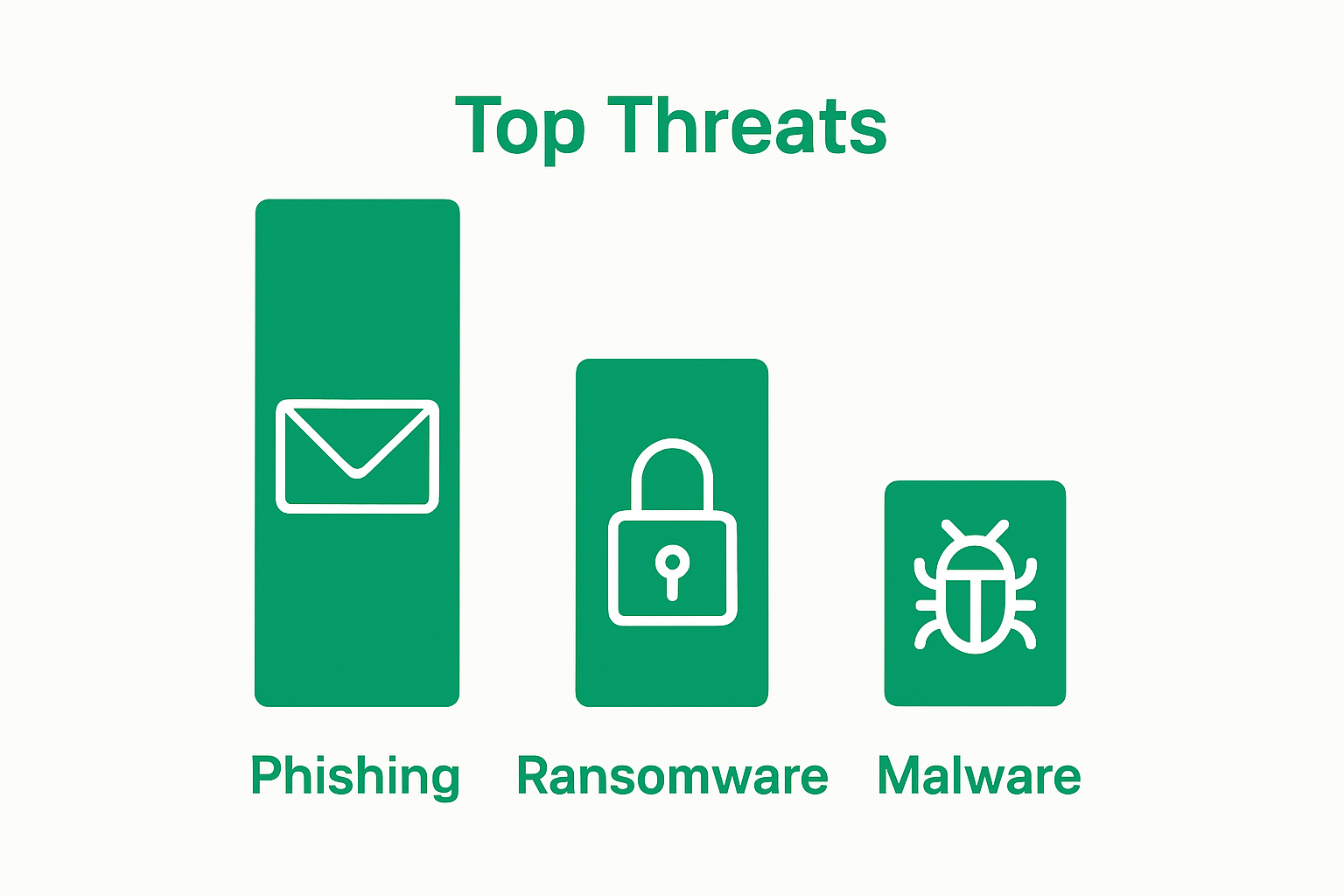
To help readers quickly understand the main types of cyber threats faced by small businesses, the table below categorizes and briefly explains each threat mentioned in the article.
| Threat Category | Description |
|---|---|
| Phishing | Deceptive emails or messages aiming to steal sensitive information |
| Ransomware | Malicious software that locks data and demands payment |
| Malware | Harmful software like viruses, spyware, and trojans |
| Social Engineering | Manipulating individuals to reveal confidential information |
| Viruses | Programs that replicate and spread across networks |
| Spyware | Software that secretly collects data without consent |
| Worms | Self-replicating programs that spread through networked systems |
Building a Cybersecurity Culture: Responsibilities and Best Practices
Creating a robust cybersecurity culture requires more than implementing technology solutions. It demands a comprehensive approach involving leadership commitment, employee engagement, and ongoing organizational learning. Explore comprehensive data protection strategies.
Leadership and Organizational Commitment
Leadership plays a pivotal role in establishing a strong cybersecurity foundation. According to the National Institute of Standards and Technology, cybersecurity must be viewed as a strategic business priority rather than a purely technical concern.
Key leadership responsibilities include:
- Setting clear cybersecurity expectations and standards
- Allocating adequate resources for security initiatives
- Demonstrating personal commitment to security practices
- Creating accountability mechanisms
- Integrating security considerations into business strategy
Employee Training and Awareness
Employees represent both the most vulnerable and most critical component of cybersecurity defense. Comprehensive training transforms staff from potential security risks into active protection agents.
Effective training programs should focus on:
- Recognizing potential security threats
- Understanding personal responsibility in protecting digital assets
- Learning proper information handling protocols
- Developing critical thinking about digital interactions
- Reporting suspicious activities promptly
By fostering a proactive and informed approach to cybersecurity, small businesses can significantly reduce their vulnerability to digital threats and create a resilient organizational culture.

Protect Your Small Business from Digital Threats—Turn Knowledge Into Action
After reading about the real dangers of phishing, ransomware, and other evolving cybersecurity threats, you may be wondering how to secure your small business and maintain your customers’ trust. You know the risks: one data breach can impact your reputation, disrupt your operations, and threaten your financial stability. Now is the time to move from understanding these problems to putting solutions in place that make a difference.

Let Finepoint Design help you create a safer digital environment for your business. Our services are not just about website development. We focus on building reliable, secure online foundations while helping you grow through better marketing and search engine strategies. Take the next step to protect your reputation, data, and customer relationships—visit Finepoint Design today or learn more about how to keep hackers out of your business website and maintain your website effectively. Secure your business before a cyber incident forces you to act.
Frequently Asked Questions
What is cybersecurity for small businesses?
Cybersecurity for small businesses involves protecting digital assets, networks, and systems from cyber threats and unauthorized access, ensuring operational integrity and financial stability.
Why is cybersecurity important for small businesses?
Small businesses are often targeted by cybercriminals due to their limited security resources. Cybersecurity helps prevent financial loss, reputational damage, and operational disruptions from cyber incidents.
What common cyber threats do small businesses face?
Small businesses commonly face threats such as phishing attacks, ransomware, malware, and social engineering tactics that exploit human vulnerabilities to gain unauthorized access to sensitive information.
How can small businesses improve their cybersecurity strategies?
Small businesses can enhance their cybersecurity by implementing regular software updates, employee training programs, strong password protocols, multi-factor authentication, and secure backup systems.